
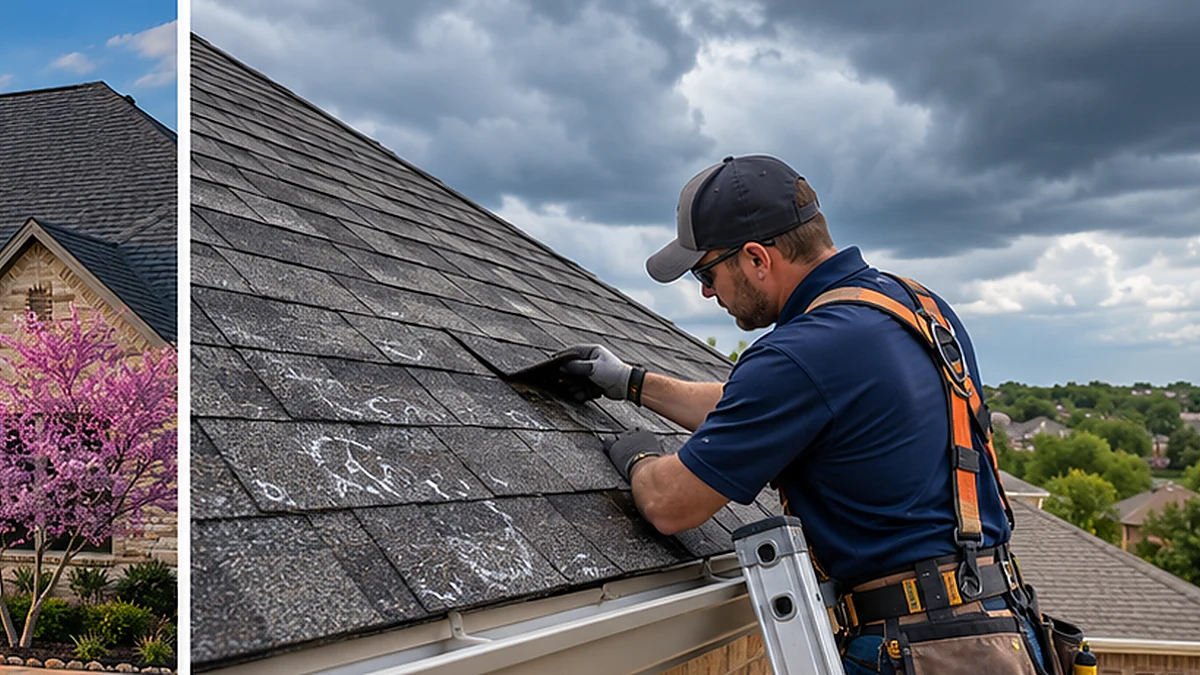
Oklahoma homeowners know how quickly blue skies can become hail, straight-line winds and heavy rain. What is less obvious is what those storms leave behind on a roof that looks perfectly normal from the driveway.
1. Damage is not always visible from the ground
Wind may loosen or crease shingles without blowing them off the roof. Hail may affect shingle surfaces, roof accessories and metal flashing in different ways. Roof age, material type, impact conditions and prior wear all matter. A professional assessment looks beyond the most obvious missing shingle.
A roof that has no active leak may still have damaged components that deserve attention. Conversely, finding a few hail marks on metal items does not automatically prove that an entire roof needs replacement.
2. Inspection photographs help establish a condition record
Timely pictures and a written summary can help a homeowner understand what was found after a particular weather event. The record may be useful when obtaining a repair estimate, monitoring a problem or speaking with an insurer. Ask what areas were accessible, which components were inspected and whether any recommendations require further evaluation.
3. Small openings can lead to larger water problems
Wind-lifted shingles, compromised flashing and roof penetrations may allow water intrusion under certain conditions. Water does not always appear immediately on the ceiling. Sometimes it travels along framing or insulation before becoming visible indoors. Addressing a localized problem early may help limit interior damage.
4. An inspection helps separate repair from replacement
A reputable inspection should not begin with the assumption that every storm requires a new roof. The important questions are how extensive the damage is, whether components can be effectively repaired, what the remaining roof condition looks like, and what applicable building or manufacturer requirements mean for the project.
5. Insurance decisions require a separate conversation
Your policy, deductible, exclusions and the insurance company's evaluation determine coverage. A roofing contractor can provide observations, photos and an estimate; the insurer decides whether a particular loss is covered and the amount paid. You do not need to authorize a full replacement simply because someone offers a free inspection.
Before filing a claim, review your policy and speak with your insurance carrier when appropriate. Do not sign documents you do not understand, and be cautious of anyone promising that your deductible can be waived.
When should you request an inspection?
- After significant hail or damaging wind in your immediate neighborhood
- If you find missing shingles, damaged roof accessories or shingle fragments on the ground
- When a ceiling stain, damp attic area or new leak develops
- If the roof is aging and you want to establish a condition baseline
Photograph what you can safely see from the ground, write down the storm date, and avoid climbing onto a wet or damaged roof. If urgent water intrusion is present, take reasonable safe steps to limit additional damage and contact a roofing professional.
What Canadian River Roofing can do
Our roofing team can discuss your concerns, inspect accessible conditions and explain whether maintenance, repair, further investigation or replacement appears appropriate. We do not make insurance coverage determinations or act as your public adjuster. To request a review, use the roof inspection page or call our roofing line.
Note: This article provides general roofing education, not an evaluation of any specific roof or guarantee of insurance coverage. For personalized recommendations, request an inspection.